Steam’s free-to-play section is mostly a graveyard of gacha games and battle royale clones begging you to open your wallet five minutes in. But buried in there are a few genuinely good games that cost nothing, including a bunch of addictive turn-based RPGs that you can download and play right now.
Turn-based RPGs tend to get overlooked when players scroll through free sections, probably because they take real time to master and pull off. You can’t really fake a battle system the way you can slap together a quick arcade shooter. So, when one of these does show up free of charge, it usually means the developer had a good reason to give it away. And if you want to experience that magic, here are five of the best turn-based RPGs you can play for free on Steam.
Moonring

Moonring showed up on Steam in September 2023 with almost no marketing, which is wild considering who made it: Designer Dene Carter, who co-created the original Fable. This is not Fable, however. It’s a tile-based, Ultima-inspired RPG where every step you take advances the world by a turn. Whether it’s enemies moving or weather shifting, everything is tied to your movement.
As “Dreamless,” you get to explore the world of Caldera now that it has been restored after five moons rose in the sky and brought a new pantheon of gods. The world map is hand-built, but the dungeons underneath regenerate every time you leave, so there’s no memorizing a layout and steamrolling it. There are over a hundred enemy types, ship-to-ship combat if you want to take to the sea, and abilities called Gifts that behave differently depending on the current moon phase.
The reason it’s free is almost more charming than the game itself. Carter had revealed that he didn’t need the money and would rather give something back during a rough stretch for a lot of people. That’s it—no ads, no premium currency, no “free for now” asterisk. The PC version has stayed free so far, but if you want to play it on Nintendo Switch, you have to spend a bit.
If you liked the disorienting, “figure it out yourself” feeling of old Ultima games, or something like Caves of Qud, you’d surely like Moonring.
There’s no map marker pointing you toward the next objective, no quest log holding your hand. Wandering into a dungeon with no idea what’s waiting a few floors down is a feeling most modern RPGs have designed out of existence, and Moonring brings it back on purpose.
Epic Battle Fantasy 3

Epic Battle Fantasy 3 started life as a Flash game back when Flash games were still a thing, and the Steam release cleaned it up without sanding off what made it fun. It’s a turn-based JRPG-style game that doesn’t take itself seriously: Expect jokes, pop culture references, and enemy designs that range from cute to deliberately ridiculous.
Underneath the goofy tone is a combat system with more depth than you’d expect. Status effects matter, elemental weaknesses are worth tracking, and the game leans into old-school RPG mechanics like equipment loadouts and skill progression without over-explaining any of it. It’s also generous with exploration, so you get a good amount of world to poke around outside of fights, with secrets and optional bosses tucked away for players who go looking.
As you’ve probably realized, it’s a part of a series (Epic Battle Fantasy 4 and 5 came after), and this third entry was made free on Steam as a way to promote the other games in the series.
What’s easy to miss going in is how much content is packed in. There are more than 10 hours of content, with plenty more if you go after optional challenges and secrets, plus a crafting system and difficulty options that scale from breezy to brutal. It also works as an entry point for newer players who find RPGs overwhelming. The humor keeps things light while the systems underneath teach you how turn-based combat works.
Grimm’s Hollow

Grimm’s Hollow is a short, RPG Maker–style turn-based game built by a solo high-school developer, and it punches well above its budget. You play as a young reaper named Lavender, exploring a village in the afterlife while searching for her missing brother and trying to escape the Hollow.
The combat is straightforward turn-based stuff—nothing revolutionary—but the game isn’t really selling you on its battle system. It’s selling an atmosphere and great writing. The pixel art has a hand-drawn, slightly melancholy style, the soundtrack does a lot of heavy lifting, and the character writing is unusually thoughtful for something this small. Most players finish it in around two to four hours, so you can beat it in a single sitting.
Interestingly, Grimm’s Hollow was released as freeware, with no traditional price tag attached. The developer originally conceived it as a small first game and developed it largely alone, handling the art, writing, programming, and other core work. The soundtrack, however, included contributions from other artists.
It’s hard to believe one high-school student built so much of the game, especially since the village hub and the small environmental storytelling scattered around it don’t feel like a first project.
Age of Fear: The Free World
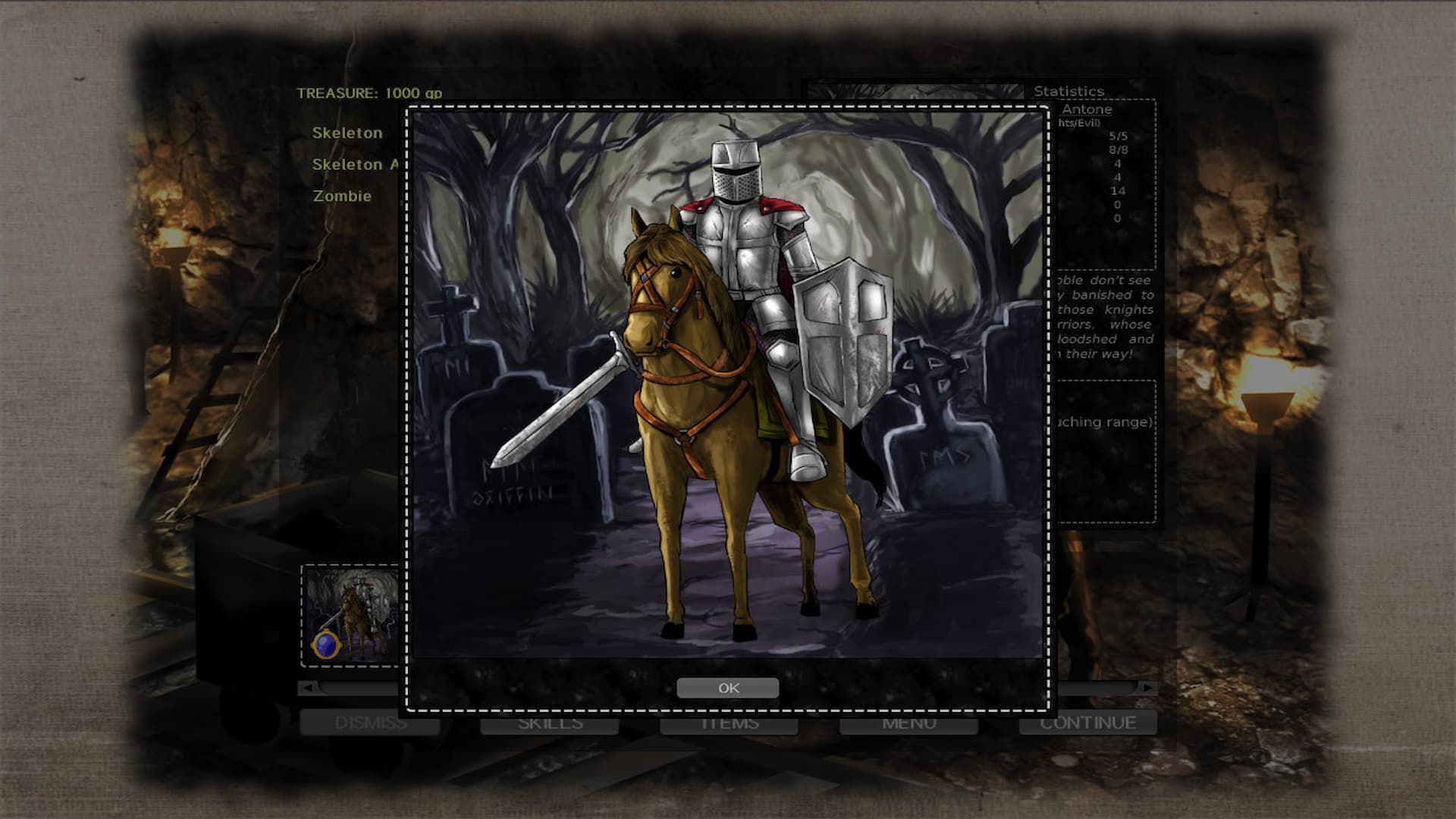
Age of Fear: The Free World is a tactical, tabletop-style combat game closer to Heroes of Might and Magic than a traditional JRPG. It’s the standalone free entry in the Age of Fear series, working as an introduction to the paid entries.
You command squads of units across battle maps, managing positioning, unit types, and terrain instead of controlling one character at a time. It’s got a dark fantasy setting with vampires, undead, and other horror-fantasy factions, and the tone leans grim. The scope is smaller than the paid Age of Fear games, but there’s plenty to do, with quests, exploration, and procedurally generated battles.
The pacing in The Free World is slower than the other entries in this series, which fits the genre: tactical battles reward patience, and fights can become lengthy once armies get large. If you’ve bounced off turn-based RPGs because they’re too simple for you, this one’s for you. Managing a whole squad and watching a plan come together scratches a different itch than typical JRPG-style combat.
GWENT: The Witcher Card Game

GWENT started as a mini-game inside The Witcher 3 and got popular enough that CD Projekt Red spun it into its own card game. Calling it “turn-based” is accurate in the loosest sense—it’s a strategy card game played in rounds—but the turn-by-turn decision-making and the deep connection to Witcher lore earn it a spot on this list.
Two players alternate placing cards across two rows, each with its own combat dynamics, trying to win at least two of three rounds through card value, bluffing, and resource management. It plays faster than most digital card games, usually ten to twenty minutes a match, and rewards reading your opponent as much as deck-building.
Yes, it has cosmetic purchases and card kegs you can buy, so that could be a catch. But you can earn cards and build competitive decks through the free-to-play model alone, and there’s no pay-to-win mechanic locking power behind a credit card.
If you’ve played The Witcher 3 and remember GWENT as the game you’d rope Geralt into at every tavern, the standalone version feels familiar, just with more factions and more room for strategy. You can also practice against AI if you’d rather ease in before playing against other players.

- Brand
-
Valve
- Original Release Date
-
September 12, 2003