Weddings come with a whole bunch of traditions, many of which have been around for centuries. Nowadays, a lot of couples handpick the ones they want to follow, and simply scrap the rest. But what happens when one partner is hell-bent on adhering to a particular custom that makes the other person feel uncomfortable, humiliated, or even violated?
That’s the question being raised after a bride-to-be shared how she’s expected to participate in something known as a handkerchief ceremony on the night of her wedding. In case you’re unfamiliar with the term, it’s basically a ‘purity’ test to check whether a woman has been ‘saved herself’ for marriage. When she refused to agree to the ceremony, the bride’s fiance told her she has to do “no matter what.”
She was all set to get married… until she heard about the “handkerchief ceremony”

Image credits: syda_productions / Magnific (not the actual photo)
Her fiance says purity testing is mandatory, and she has to do it “no matter what”


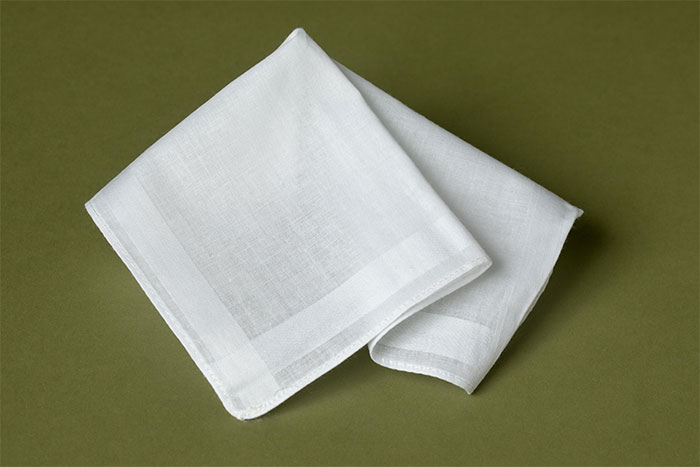
Image credits: magnific / Magnific (not the actual photo)
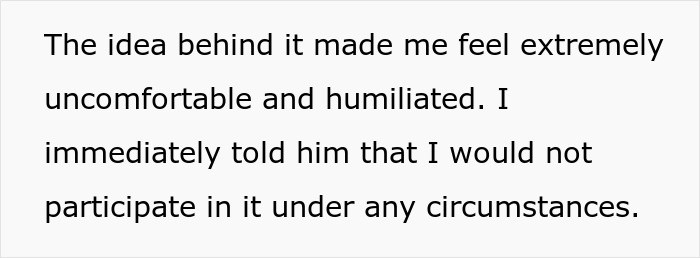

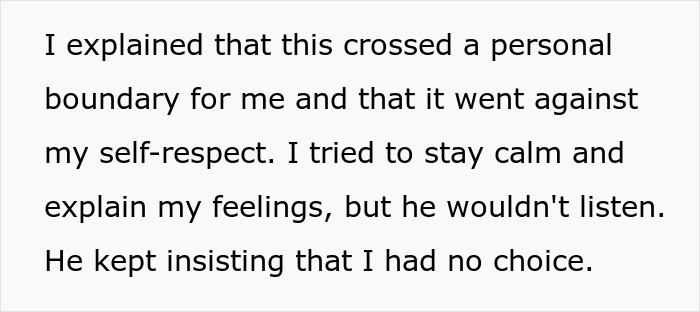
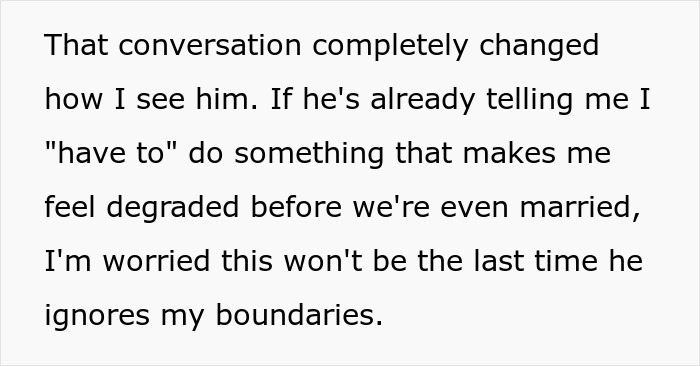

Image credits: magnific / Magnific (not the actual photo)

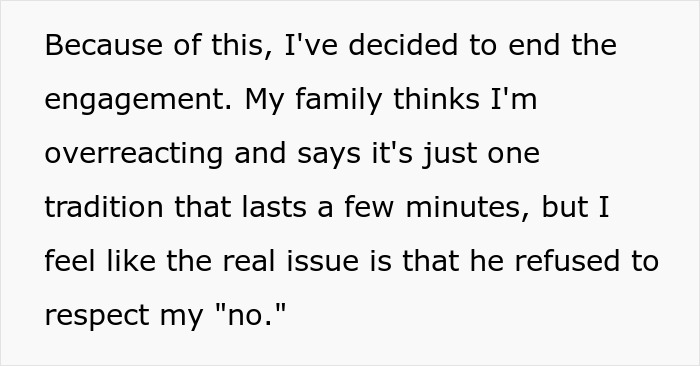

Image credits: Financial_Mirror7966
The woman reiterated that’s about more than just the tradition

Image credits: Pablo Merchán Montes / Unsplash (not the actual photo)
The United Nations calls virginity testing a human rights violation but it’s still happening in several countries
South Africa, Iran, Indonesia, Britain, and even the United States are among the countries where some women are still being subjected to “virginity tests.” Even when it is illegal.
One survey found a 4.5% prevalence of virginity testing in the US. “The average age of the women who underwent virginity testing was 15-17 years old, legally considered minors in the United States,” notes the 2022 study, published in the Fertility and Sterility Family of Journals.
7 of the 156 healthcare providers polled said they’d performed virginity testing, while 9% reported being requested to perform such testing. The vast majority said they’d never actually encountered virginity testing during their medical training.
The U.K. government has outlawed the practice, saying it amounts to violence against women and girls. But authorities say they’re aware it’s still happening in the country.
“Women and girls are coerced, forced and shamed into undergoing these procedures, often pressurised by family members or their intended husbands’ family in the name of supposedly upholding honour and to fulfil the requirement that a woman remains ‘pure’ before marriage,” reads that country’s Department of Health and Social Care’s website.
“Some practitioners issue a certificate to prove ‘virginity’ after a virginity test or hymenoplasty, while some will simply tell the family or community members whether a woman or girl has ‘passed’ a virginity test,” it adds.
Meanwhile, in South Africa, virginity testing, traditionally known as ukuhlolwa kwezintombi, remains a deeply controversial practice. It’s governed by strict statutory conditions under the country’s Children’s Act.
According to the Soul City Institute for Social Justice, the practice is permitted for children only if they are over 16 years old, and have given proper, informed consent after receiving counseling. The law also states that the results of a virginity test may not be disclosed without the consent of the child, and that the body of a child who has undergone virginity testing may not be marked.
Some argue that from a cultural point of view, it is a vital tradition for promoting chastity and preventing disease. But human rights organizations and statutory bodies believe it is as an unscientific violation of bodily integrity and gender equality.
Yet thousands of girls undergo ukuhlolwa kwezintombi every year.
“Girls undergoing this ritual gather to camp overnight and participate in traditional songs and dances before being tested,” reveals the Human Sciences Research Council (HSRC) of South Africa.
The HSRC adds that according to one participant who was interviewed, “They take something like that imbola [white clay] and put one dot on your forehead … Then you come out of the forest [or bush], then mothers would ululate [express a sound of deep emotion], even fellow participants will ululate.”
The white mark, according to the HRSC, is an indicator of purity.
“Its absence publicly labels young girls as no longer virgins, which researchers maintain causes distress, humiliation and stigma for both the girls and their families,” notes the site.
Many were shocked that such outdated traditions still exist, and warned her to leave
“It’s not always about you”: Some people had a different take, and their opinions were wild



Thanks! Check out the results:
Total votes ·
Newsletter
Subscribe to Access
Exclusive Polls

By entering your email and clicking Subscribe, you’re agreeing to let us send you customized marketing messages about us and our advertising partners. You are also agreeing to our Privacy Policy.
Thank you! You’ve successfully subscribed to newsletters!