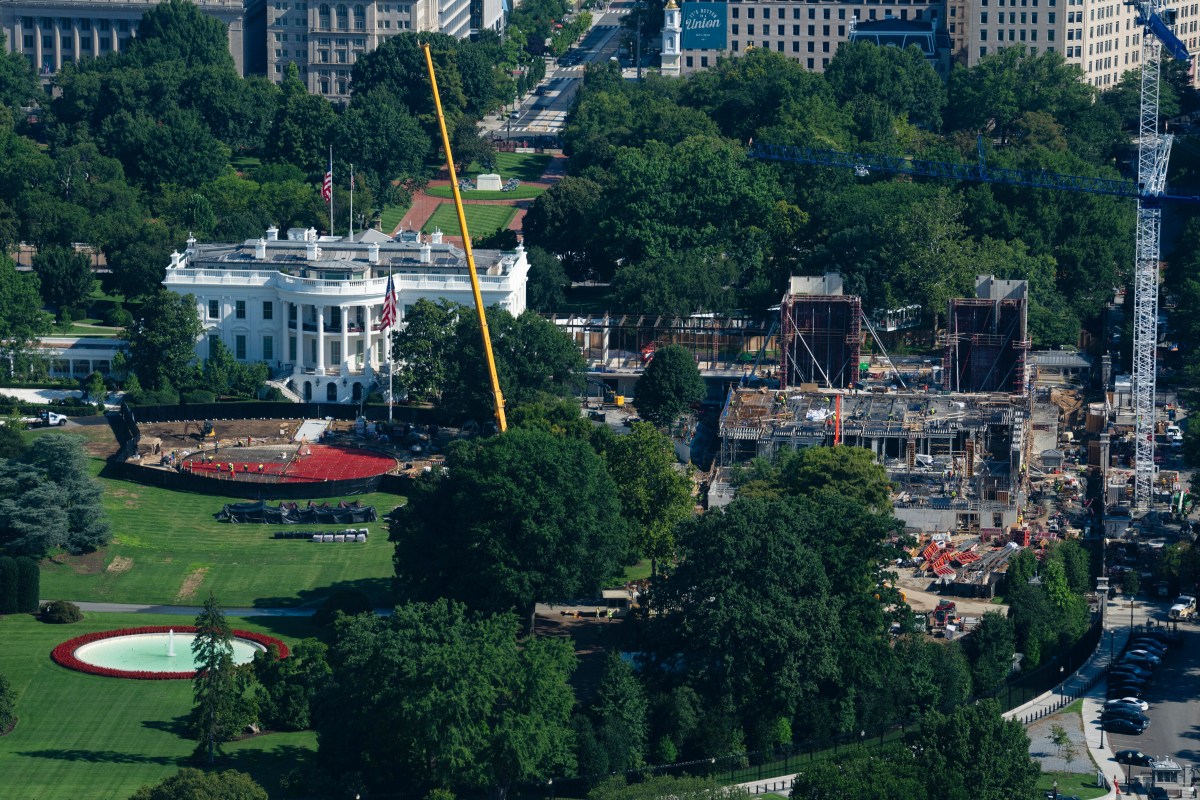
The fight over President Donald Trump’s $400 million White House ballroom has reached the Supreme Court, with Chief Justice John Roberts giving preservationists until Tuesday to respond to the administration’s emergency request to keep construction moving.
The deadline comes after the Trump administration asked the justices to intervene in the escalating legal battle and temporarily block a lower-court order that is scheduled to take effect August 21. Solicitor General D. John Sauer filed the emergency application Friday, arguing that stopping construction would threaten presidential security and improperly interfere with the executive branch.
The application, filed in National Park Service v. National Trust for Historic Preservation, asks the Supreme Court for an immediate administrative stay while the administration prepares a broader appeal. The government says the lower-court injunction would halt construction of what it describes not simply as a ballroom, but as an integrated military and security complex at the White House’s East Wing.
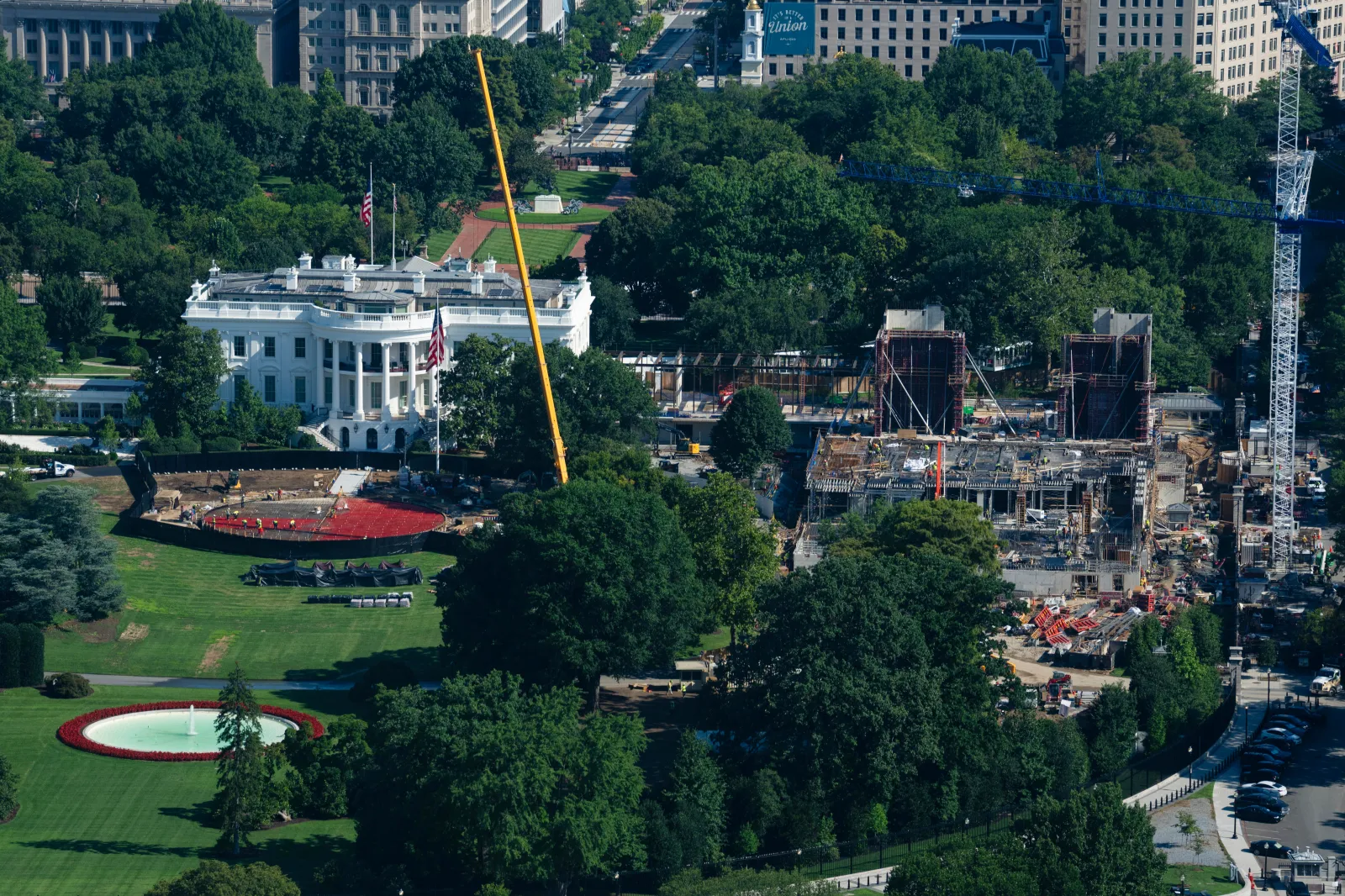
“The Project is critical” to providing a secure location for the president, senior officials and other dignitaries, Director of National Intelligence Jay Clayton said in a declaration cited by the administration. The filing argues that the complex is designed to protect the White House against modern threats and includes hardened structures, bomb shelters, medical facilities, military infrastructure and protection against drones and missiles.
The administration also points to what it describes as a worsening threat environment surrounding Trump. Its filing cites multiple incidents and alleged plots, including a shooting near the White House complex, an alleged drone threat and a reported missile threat involving Air Force One, as well as the 2024 assassination attempt in Butler, Pennsylvania.
The D.C. Circuit ruled 2-1 last week that Trump could not proceed with above-ground construction without congressional authorization. The majority rejected the administration’s argument that existing federal statutes gave the president sufficient authority to undertake the project. The appeals court nevertheless allowed its ruling to remain on hold temporarily, giving the administration time to seek Supreme Court intervention.
The administration’s Supreme Court filing takes aim at that ruling on several fronts. It argues that the National Trust lacks standing to challenge the project, that Congress has already authorized the executive branch to make alterations and improvements to the White House, and that the balance of hardships strongly favors allowing construction to continue.
The government is also warning the justices that stopping work now could create problems of its own. According to the filing, the project is already about 65% complete, with a 250-person construction crew working around the clock. The administration says the partially completed concrete-and-steel structure could present safety and security risks if construction suddenly stops.
That argument reflects how dramatically the case has changed since the project was first announced. What began as a controversial plan for a new 90,000-square-foot ballroom has become a constitutional and separation-of-powers fight over how much authority a president has to alter the White House and its grounds. The administration now insists that the ballroom is inseparable from a broader national-security installation.
The National Trust for Historic Preservation, which brought the lawsuit, will now have until Tuesday to answer the administration’s emergency request. Roberts’ deadline does not mean the Supreme Court has decided to hear the underlying case or that the justices have sided with either party. It puts the dispute on an accelerated timetable as the August 21 deadline approaches.
The justices could ultimately allow construction to continue while the case proceeds, leave the lower-court order in place, or take some narrower action. For now, the next move belongs to the preservationists—and then to the Supreme Court.
With the August 21 deadline only days away, the ballroom fight has moved from a battle over construction in Washington to a high-stakes test of presidential power before the nation’s highest court.