Iranian officials taunted the U.S. and claimed full control and management of the Strait of Hormuz on Thursday, contradicting President Trump’s contention the U.S. is directing oil traffic through the waterway at the heart of the Middle East dispute.
The Islamic Revolutionary Guards Corps said no commercial or tanker vessel could transit safely through this strait without the authorization and supervision of Iran’s “powerful armed forces,” according to state-affiliated media.
Tehran claimed full control of the strait, despite its ongoing talks with Oman on managing it, as part of a string of taunts directed at Mr. Trump and his administration.
Iranian Foreign Minister Seyed Abbas Araghchi said the U.S. “miscalculated” in waging war on his country. It was a direct response to Mr. Trump, who one day earlier said Iran’s economy was failing and its leaders were relying on bluster and “fake news” to hobble along.
“The U.S. has long miscalculated due to intelligence failures. Case in point: The war on Iran. Now, an even bigger miscalculation on the Strait of Hormuz,” Mr. Araghchi said on X. “Worse than fake news is fake intelligence. Be careful. Allah is Great, Greater than ANY power on Earth. In Allah we trust.”
The last part was a dig at Mr. Trump saying “praise be to Allah” because he thought Iran could no longer be a bully in the Middle East.
State media in Iran is also full of doctored images mocking Mr. Trump over his use of a catering truck to secretly transfer from a so-called decoy Air Force One to a military plane so he could safely depart the NATO summit in Turkey.
Broadcasters and social media accounts tied to the regime depicted the president cowering in a catering cart surrounded by Diet Cokes and McDonald’s food.
The two sides are trading insults exactly two months after leaders signed a memorandum of understanding calling for the lifting of the U.S. blockade of Iranian ports and restoring normal traffic in the Strait of Hormuz.
“I hereby fully authorize the toll free opening of the Strait of Hormuz, and, simultaneously herewith, authorize the immediate removal of the United States Naval blockade. Ships of the World, start your engines. Let the oil flow!” Mr. Trump wrote on June 14.
The pause cheered Wall Street and allowed oil and gasoline prices to fall, but the peace was short-lived over attacks on commercial shipping in the strait.
Since then, Mr. Trump has reimposed his blockade and is betting Iran will not be able to hold out forever.
Congressional Democrats, however, say they’re worried about the toll on American soldiers and consumers.
The average U.S. price of gas stood at $4.07 on Thursday, a 3-cent jump from Wednesday and a 37% increase from when the war started, according to the AAA motor club.
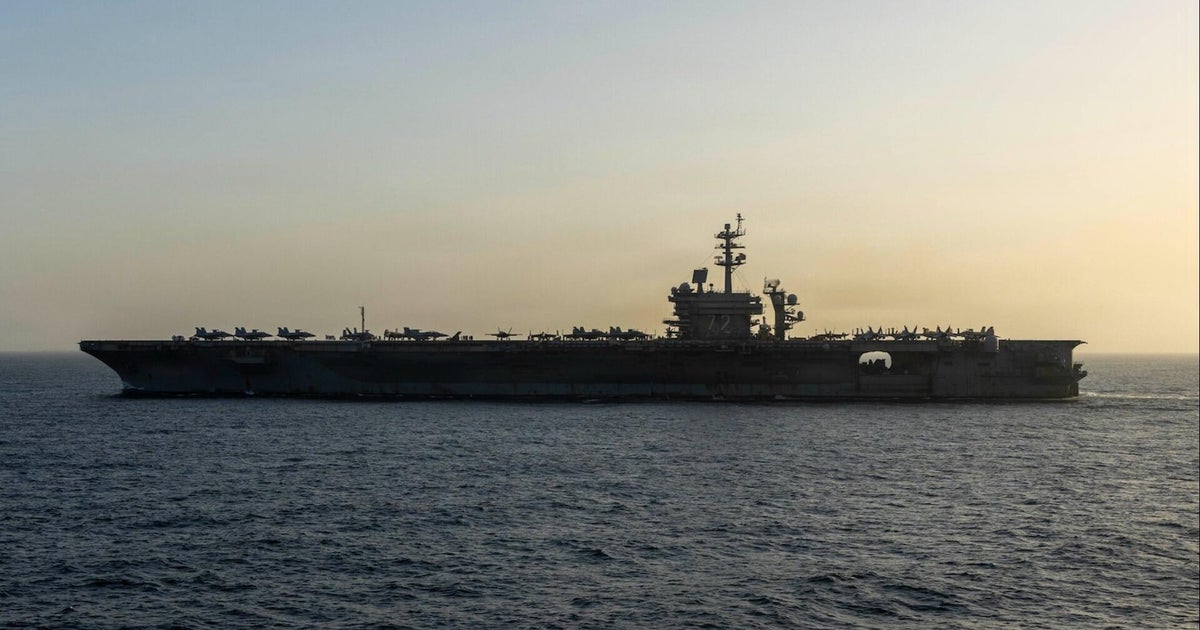
Sen. Richard Blumenthal, Connecticut Democrat and member of the Senate Armed Services Committee, asked Defense Secretary Pete Hegseth and Acting Secretary of the Navy Hung Cao what they are doing to help sailors deployed on board the USS Abraham Lincoln, which has been at sea for nearly seven months.
The deployment was scheduled to end in May but has been extended indefinitely, sparking concerns about sailors’ well-being.
“There have been widespread reports of shortages of basic supplies, water contamination, plumbing issues, deteriorating mental health, deck safety concerns, and disruptions in the mail system, which have caused many care packages in route to the ship to be lost in transit for months,” Mr. Blumenthal wrote in a letter to the secretaries.
Speaking to reporters in Panama on Thursday, Mr. Hegseth acknowledged that some deployments last longer and are tougher than others.
“We make sure that every ship, every crew, every captain, has everything that we can provide them at every single moment,” he said. “I have more respect and gratitude for those sailors than anybody. What they do on the high seas in austere conditions with less port calls is incredible.”
In concert with Israel, Mr. Trump launched strikes against Iran on Feb. 28 to prevent the Islamic regime from obtaining a nuclear weapon.
Tehran retaliated by restricting oil traffic in the Strait of Hormuz, triggering a cycle of violence and diplomacy.
Middle East mediators remain hopeful of a deal to reopen the waterway and settle the war, though Iran continues to dig in with new demands.
Iranian Foreign Ministry spokesman Esmaeil Baqaei said Thursday that future administration of the Strait of Hormuz must factor in payment for environmental damage to the waterway caused by commercial shipping and warfare.
As an example, he pointed to oil pollution along the shores of Qeshm Island.
“As the country with the longest coastline along the Persian Gulf and the Sea of Oman, Iran cannot remain indifferent,” Mr. Baqaei said on X. “Every party that benefits from commercial shipping through the Strait of Hormuz carries both a legal and a moral obligation to remediate the environmental harm inflicted upon the Persian Gulf and the Sea of Oman.”
• Mike Glenn contributed to this report.