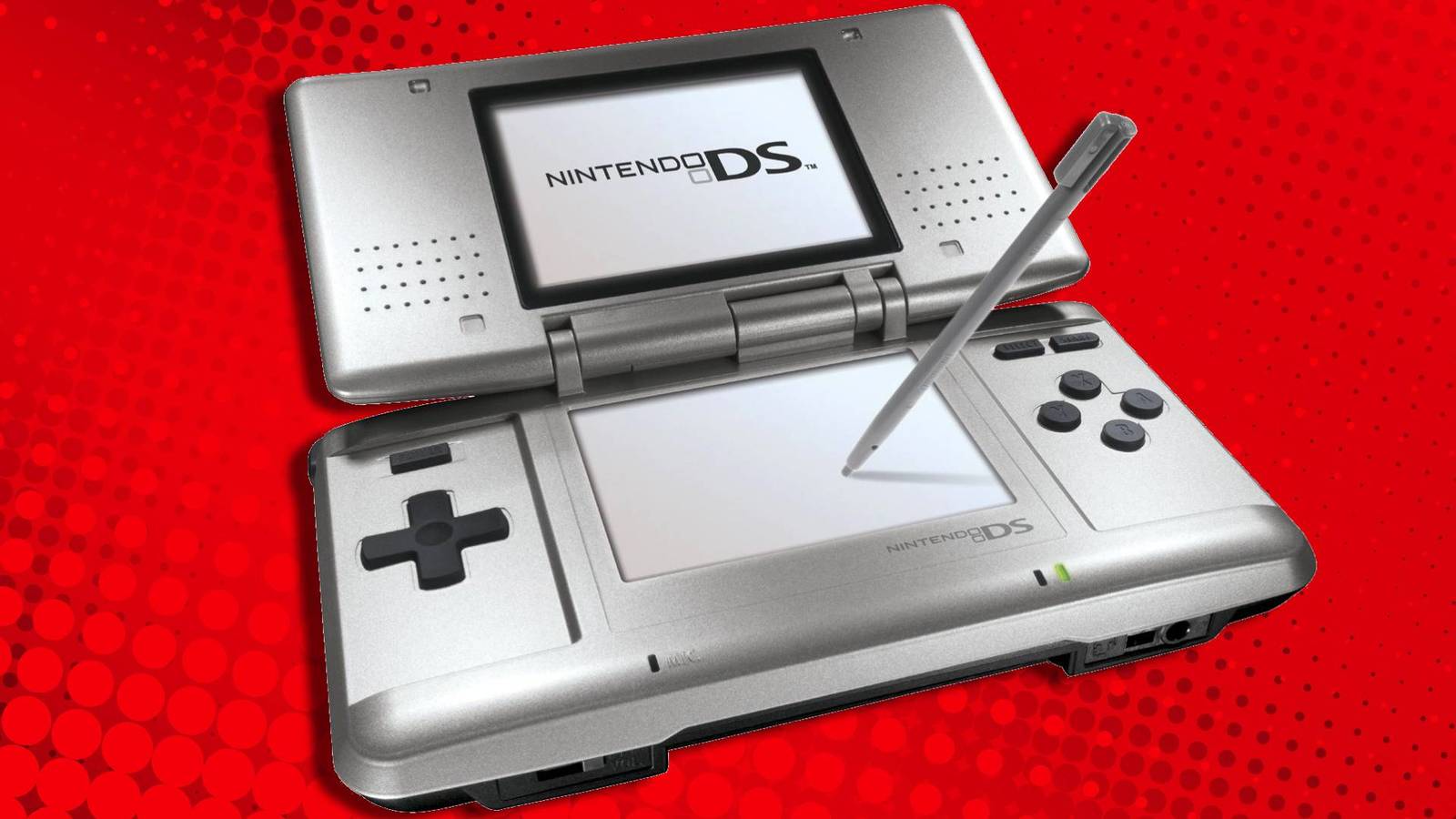
Growing up in the 2000s came with plenty of cultural hallmarks, and one of the most memorable is being surrounded by Nintendo handhelds at every turn. While Sony’s competing PSP was reasonably popular, virtually every household seemed to have at least one Game Boy Advance or Nintendo DS. I didn’t get a gaming system until later than many of my peers, but when I did, it was the inimitable DS Lite.
Until then, I spent plenty of time borrowing friends’ systems to play games, giving me plenty of insight into which games populated every carrying case. No matter how you slice it, there were plenty of popular games, and Nintendo’s biggest flagship franchises all had some major successes on the console. Only a few games felt like truly omnipresent pieces of the era, though, and a couple of them weren’t even attached to any pre-existing IP.
Nintendogs

Nintendogs cheated. Like Pokémon, Nintendo’s flagship pet sim released in multiple versions, and its ambition put the average Pokémon release to shame. At launch, Nintendogs was split into Dachshund & Friends, Lab & Friends, and Chihuahua & Friends, an impressive lineup later joined by Best Friends and Dalmation & Friends.
Regardless, it worked, as the game quickly became a standard-bearer for the DS. While some prominent DS games like New Super Mario Bros. made limited use of the system’s gimmicks, Nintendogs was the perfect showcase of what the DS could do that the PSP couldn’t. Whether flicking Frisbees across the screen, scrubbing the dirt off of dogs or planning out the route of a walk to pick up some surprises, Nintendogs made the stylus feel like an essential part of gaming.
Compared to everything else on the market, Nintendogs turned virtual pets into something that felt uniquely real. Leaving the game open for too long without playing would cause dogs to temporarily run away, and they would be hungry and dirty whenever you checked in after a long absence. Some of its best ideas appeared in earlier rivals like Tamagotchi, but the superior tech behind Nintendogs took everything to the next level.
Today, the audience for casual gaming is larger than ever, highlighting just how wise it was for Nintendo to take the direction it did with Nintendogs. Plenty of dedicated gamers loved it, but its low-key, pick-up-and-play nature made it attractive in a way that spanned audiences. Its Bark Mode multiplayer also added a social appeal, and showing off your dogs to your friends tapped into a vague echo of the same pride as showing off real pets.
Despite its omnipresence in the 2000s, Nintendogs failed to carry the same momentum into the 2010s and 2020s. After the original game took second place for overall copies sold on DS, its successor Nintendogs + Cats slipped to 14th place in the 3DS charts, and the Nintendo Switch never got an official entry of its own. Still, Nintendogs‘ reign was once unparalleled, and the decline over the years only serves to highlight its permanent association with the 2000s.
Brain Age

Before the release of the Nintendo DS, few would have likely believed that an educational game could be a true bestseller. When Brain Age launched, however, they were eager to make it happen. As a flagship of the “edutainment” push, Brain Age made parents feel like a gaming console could finally be used as an instrument of learning.
I doubt Brain Age ever topped the Christmas wish list charts, and I’m sure some copies of Brain Age were sitting untouched by kids who were less enthusiastic about the concept than their parents. On the whole, however, it probably wasn’t that many. Despite Brain Age‘s relatively minimalist presentation, it did, indeed, make brain training fun.
A big part of this was the quirky presence of Dr. Kawashima. On top of lending his authority to the game, the Japanese neuroscientist also lent his visage, appearing as a disembodied head that lent a surprising amount of personality to the game. The concept of lowering your “Brain Age” also did wonders, turning random exercises with numbers and letters into something with a tangible goal.
Like Nintendogs, Brain Age positioned the DS as a truly unusual system with unique capabilities, likely helping the overall sales of the hardware. Rather than holding the DS in a standard position, Brain Age had players turn it sideways and hold it like an open book, using the stylus as the only method of control. It wasn’t the only DS game to embrace this concept, but it was certainly the most high-profile one, and it felt intuitive and elegant rather than gimmicky.
Brain Age was far from the only edutainment hit on the DS. Brain Age 2 also sold incredibly well, unsurprisingly, and competitors like Big Brain Academy managed to carve out their own niches. Over the years, the options got increasingly esoteric, with concepts ranging from Ubisoft’s My SAT Coach to the Brain Age-like vision training game Flash Focus. Nothing else was ever quite as ubiquitous as Brain Age, though, making Dr. Kawashima one of the truest ambassadors of the Nintendo DS.
Mario Kart DS

Technically, more people had New Super Mario Bros. than Mario Kart DS, with millions of sales separating the two titles. It never felt like it, though. New Super Mario Bros. is a fantastic game, but it’s one that everyone played on their own time, running through its inventive levels while shirking homework assignments or following their parents through department stores.
Mario Kart DS, on the other hand, was the ultimate social game for the Nintendo DS. One huge part of this was its liberal incorporation of DS Download Play. Even if you didn’t own the game, you could join those who did for multiplayer matches. If my elementary school was anything to go by, I have to imagine that children everywhere were taking extensive advantage of this possibility.
It might seem like DS Download Play could have slowed down sales, as those interested in playing the game could still participate in these memorable competitions without a cartridge. If anything, though, it probably did the opposite. The thrill of playing Mario Kart DS spoke for itself, and playing it through DS Download Play inevitably made everyone want to get their own copy.
While the Mario Kart series is always good, Mario Kart DS still represents the series at its absolute best. In the handheld scene, it was a huge technical leap from the Game Boy Advance’s Mario Kart: Super Circuit, with true 3D courses replacing Super Circuit‘s more limited Mode 7 technology. The courses took full advantage of that leap, bursting at the seams with clever challenges, dynamic moving parts, and opportunities to ruin the lives of your fellow racers.
On top of the standard racing experience, Mario Kart DS includes Balloon Battle and Shine Runners, two fantastic battle modes with memorable maps of their own. It also features a robust array of single-player possibilities, including a mission mode with unique challenges and even boss fights. To this day, the Nintendo DS entry remains a significantly more impressive package than the 3DS’s Mario Kart 7, easily justifying its widespread popularity in the 2000s.