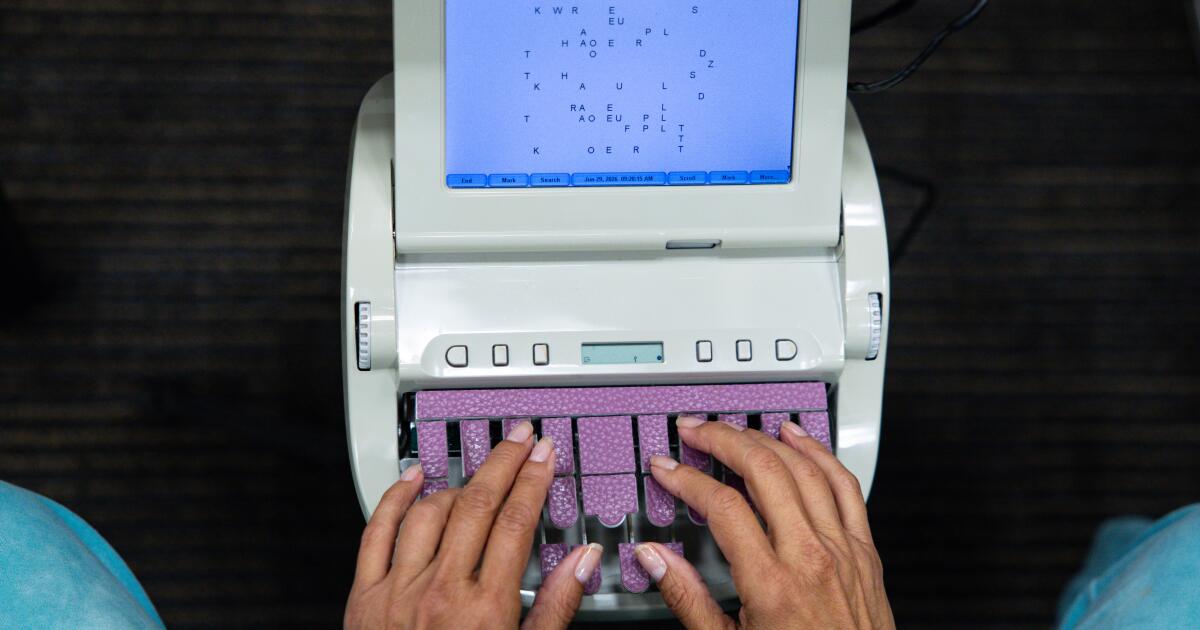
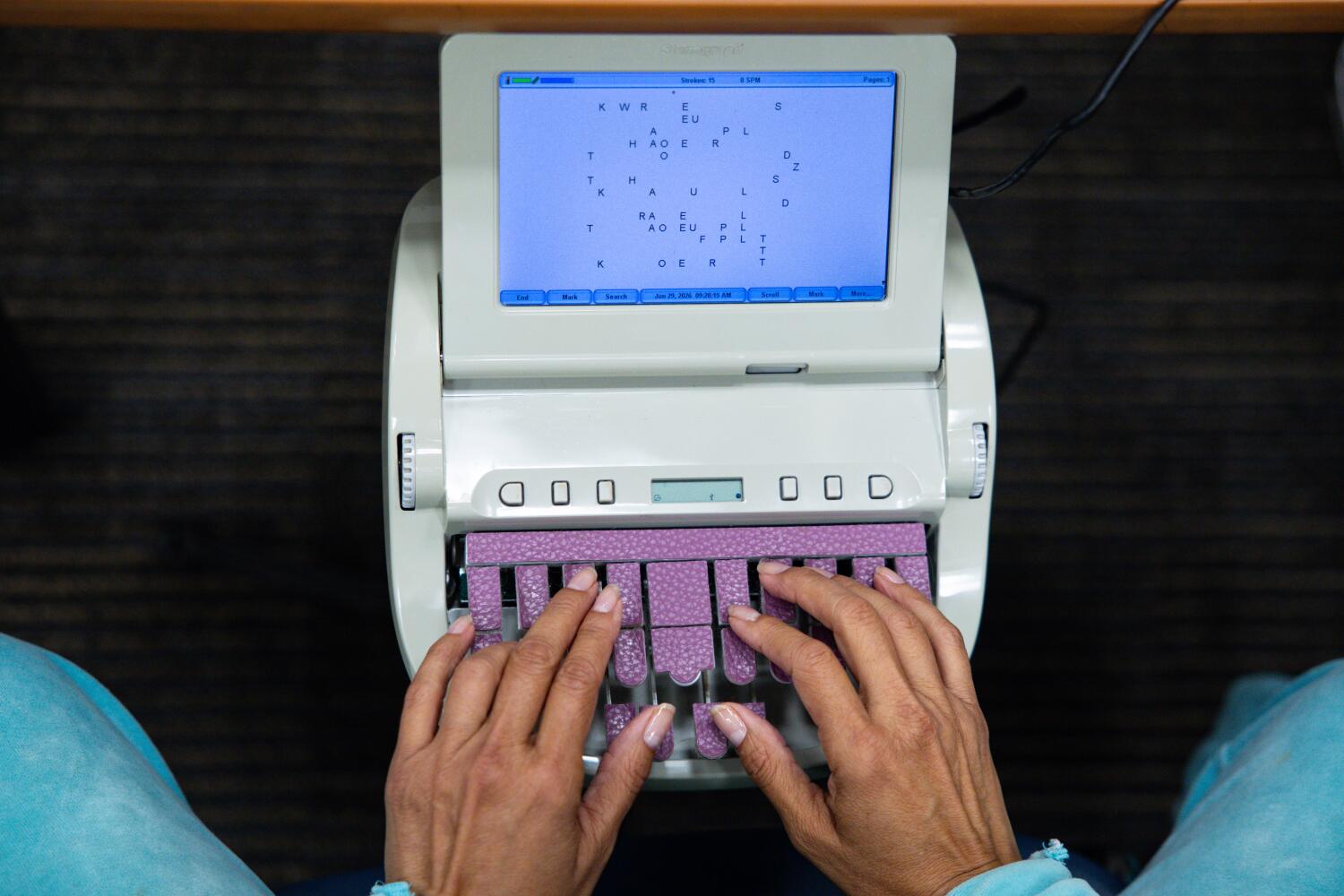
The California Supreme Court ruled Monday that electronic recording is allowed in civil cases when the court cannot provide a reporter to make a transcript and parties can’t afford to hire one, finding that a record of such hearings was “presupposed under California law.”
Until now, recording court proceedings was prohibited in most such cases, requiring a licensed reporter to be present in order take down each word that was spoken for the official record. A shortage of professional stenographers in local court systems — combined with the high cost of hiring one privately — has meant that many civil hearings go without a verbatim record of what was said, making it difficult for parties to appeal.
Reform advocates have said the problem is especially acute in proceedings that involve allegations of domestic violence and other types of family court disputes. A recent report from the California Access to Justice Commission estimated more than a million hearings went unrecorded in a single year.
“The continued failure of the superior courts to provide indigent litigants with a means of obtaining an official verbatim record deprives them of ‘meaningful access to the judicial process’,” Chief Justice Patricia Guerrero wrote for the court.
Criminal court proceedings and some types of civil hearings still will require a court reporter to make a transcript.
Although the suit originally was brought by the Family Violence Appellate Project on behalf of domestic violence survivors and other vulnerable civil litigants, the case quickly became a proxy fight between the state’s largest public sector union and its sprawling court systems.
Thousands of people could preserve their right to appeal if the courts simply switched on recording equipment they’ve already installed for hearings where no court reporter is available, advocates argued.
But such a move could undermine California’s years-long effort to rebuild the court reporter profession after it was gutted amid the state’s judicial budget crisis in 2012, labor leaders said.
At oral arguments this summer, lawyers for the state’s court system urged the justices to green-light electronic recording, saying they’d already done everything in their power to fix the problem.
Lawyers for Service Employees International Union, which represents court reporters, pleaded with the justices not to, saying the courts themselves were to blame for the reporter shortage.
Monday’s ruling sought to sidestep that dispute.
“We need not in this proceeding investigate the various causes of the courts’ inability to comply with [previous holdings] or assign blame for the unfortunate circumstances in which indigent litigants find themselves,” Guerrero wrote. “It is sufficient to recognize that, whatever the cause, courts are frequently unable to provide indigent litigants with the means to obtain an official verbatim record.”
The court extended its decision to “any litigant who cannot afford to pay a private reporter” — a group that would include most parties in most civil cases across the state.
Court reporters say only a human being can referee a hearing in real time and guarantee an accurate verbatim transcript at the end of it.
The high court ruled there simply aren’t enough of them available, and that thousands of litigants cannot be asked to sacrifice their right to an appeal while more are trained — especially in cases where “fundamental rights and liberty interests” such as child custody and conservatorship are at stake.
“As a technical matter, the services of a court reporter are not necessary to create an accurate and reliable verbatim record of trial court proceedings,” Guerrero ruled.