Today, Star Trek: The Next Generation stands out as one of the most popular iterations of the long-running franchise, but it wasn’t always that way. With the Star Trek franchise celebrating its 60th anniversary in 2026, it’s worth looking back at the long and complex history of the show, which hasn’t always seen this franchise getting glowing reviews.
After the incredible success of Star Trek: The Original Series, and a string of films which expanded the world of these stories, it felt as though the breakthrough science fiction storytelling of Gene Roddenberry would forever be worshiped by his loyal and dedicated fanbase. However, when the franchise attempted to expand with a fresh take on the popular world already established in earlier releases, both fans and critics were hesitant.
It’s hard to imagine, because today, Star Trek: The Next Generation is widely viewed as one of the best eras of the entire franchise.
With talent like Patrick Stewart as Captain Picard, Brent Spiner as Data, Jonathan Frakes as Riker, LeVar Burton as LeForge, Marina Sirtis as Deanna Troi, and Michael Dorn as Worf, not to mention the numerous other characters who joined the cast in later episodes, or whose narrative did not span the entire series, it’s impossible to think about Star Trek without The Next Generation.
Initial Reaction To Star Trek: The Next Generation Was Not Positive
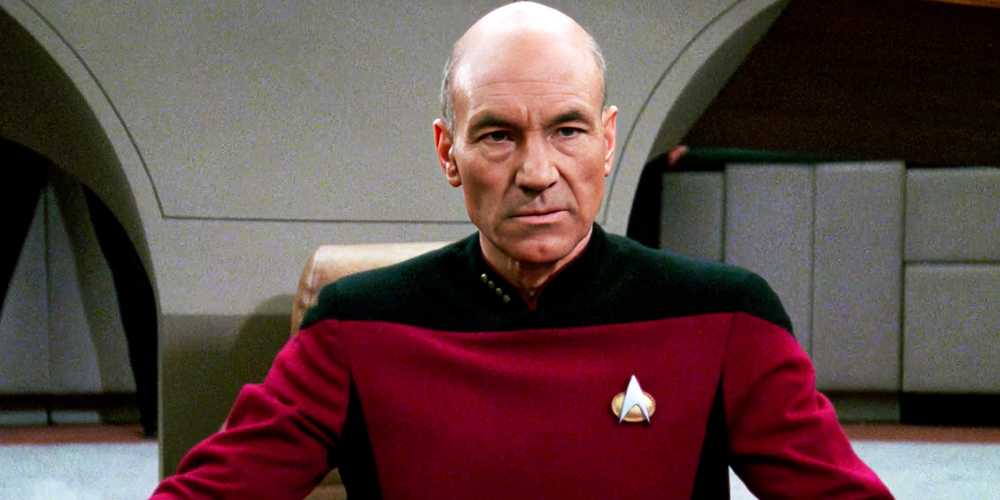
When Star Trek: The Next Generation first began airing, it was clear that some staunch fans struggled to see the Enterprise in the hands of a new crew. There is no doubt that Captain Kirk and Spock, among the rest of the original crew, were deeply beloved characters and seen as central to the franchise, which made it difficult to embrace a new era.
On top of that, it seemed as though some characters were sort of inserted to take the place of their predecessors, such as Data as a logical and largely unemotional presence that seemed to imitate Spock. But more than that, there was a great deal of criticism aimed at the stories, the performances, the characters, and just generally the entire production.
This also persisted throughout almost all of season 1 and season 2 of Star Trek: The Next Generation, as the show appeared to really struggle to find its footing. Of course, the viewing figures did prove worthy of continuing the show into season 3 and beyond, but regardless, it seems as though it was very much an uphill battle in those early seasons of the sequel series.
Star Trek: The Next Generation Season 1 Criticism Wasn’t Entirely Undeserved

Admittedly, the criticism of the audience and critics was not entirely unfounded, and contemporary viewers may still struggle to see the appeal in Star Trek: TNG seasons 1 and 2 if they were to revisit it today. While some of this can be put down to growing pains and trying to get the feel for the story and characters, it’s difficult to push through nearly 50 episodes of a show before things start to pick up.
Unfortunately, the early years of The Next Generation suffered from uneven writing and extremely rigid character dynamics that made the show suffer. It felt less dynamic and original than The Original Series, and the new arrivals seemed to have personalities that not only clashed with one another, but also the actors playing the parts.
This idea was echoed by Patrick Stewart, who spoke about his experience revisiting his early years with the character on The Graham Norton Show.
“I watched two whole seasons of ‘Star Trek: The Next Generation’, and I was very disappointed in the quality and nature of my work in the first series – it was not real enough. It was very authoritarian and very commanding, but was way too Stentorian. It was my stage background, and it didn’t work.” – Sir Patrick Stewart
This all resulted in a show that ultimately didn’t feel enough like the original, despite trying to imitate it. Instead of forcing similarities between characters and exploring how they all resemble the original crew, Star Trek: The Next Generation had to find its own place and allow the characters to evolve beyond what came before.
Thankfully, despite a deeply divisive first two seasons released between 1987 and 1989, the show seemed to slip into a groove, and things began to flow in a way that audiences began to connect with.
Star Trek: The Next Generation Won Fans Over To Become A ’90s TV Classic

Throughout the 1990s, Star Trek: The Next Generation grew from strength to strength. The characters became more complex and layered; there was more dynamic engagement between individuals in a way that felt natural and satisfying, and they stepped out from the immense shadow that was hanging over them from Star Trek: The Original Series.
It also found new strengths, beyond what The Original Series offered, as the entire Enterprise team became a major focus, in a much more meaningful way than what came before, where, despite an ensemble cast, it always felt like Kirk and Spock were at the heart of just about every story. This also helped to shape the future of Star Trek, with many of the subsequent generations of the show clearly showing how they connect back to the best aspects of Star Trek: The Next Generation.
While TNG saw its popularity peak in the 1990s, the show had an enduring legacy, and today, it stands tall as one of the most popular entries in the wider franchise’s history, with an age-old debate often arising about whether Captain Kirk or Captain Picard is the better of the two. Back when TNG started, that was unimaginable. Nonetheless, that is the legacy of this incredible entry, and one that keeps the spirit of adventure alive.
Now, we look back on Star Trek: The Next Generation with a high degree of nostalgia and appreciation for the incredible stories that helped to lay an enduring foundation that would exceed 60 years, numerous spin-off shows, and over a dozen films. And beyond that, Star Trek remains one of the most influential and popular sci-fi franchises ever made, and without Star Trek: The Next Generation’s incredible seven-season run, packed with emotion, highs and lows, and so much more, the legacy would have fizzled out long ago.

- Release Date
-
1987 – 1994-00-00
- Network
-
Syndication
- Showrunner
-
Gene Roddenberry