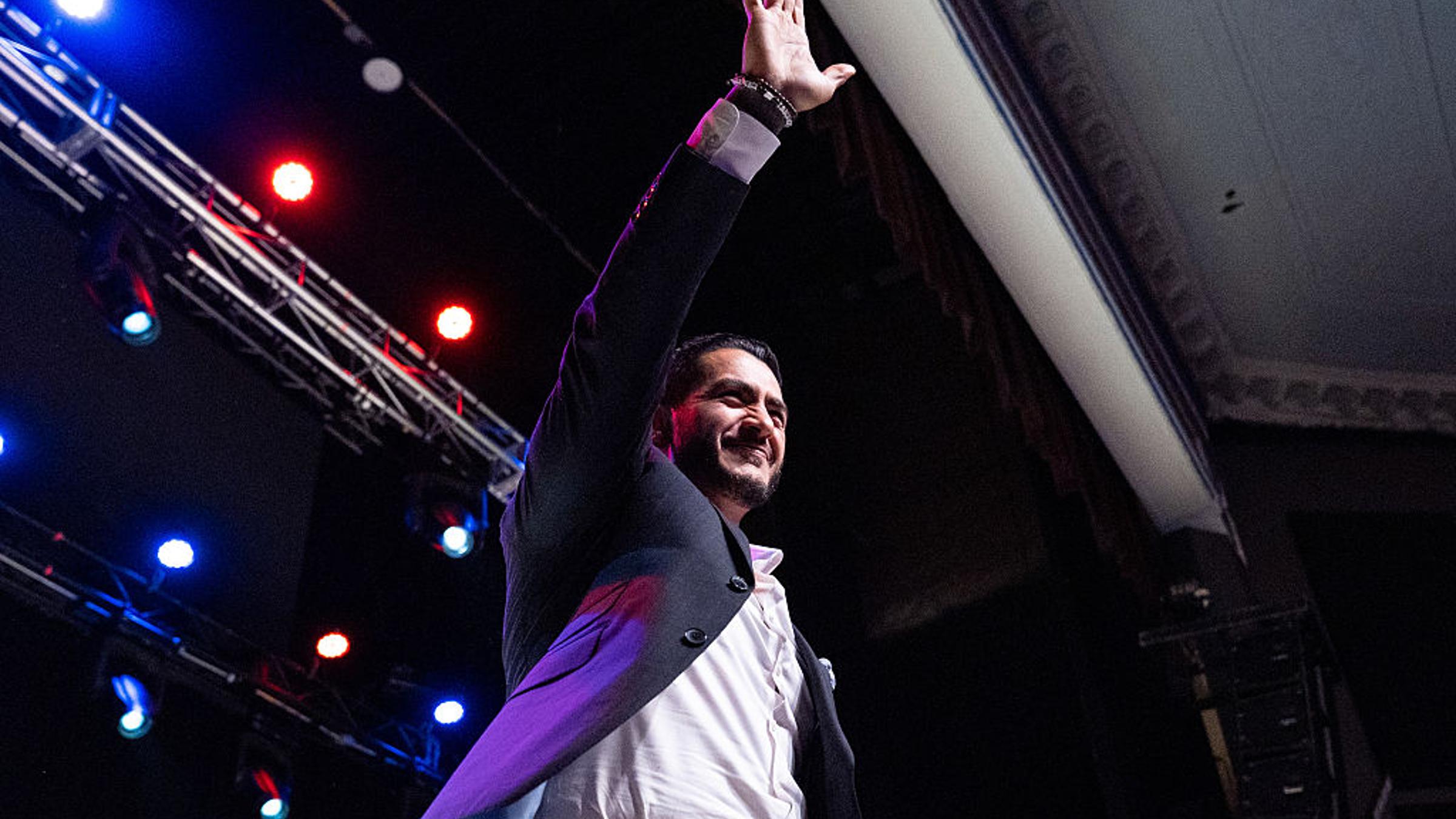
The race between El-Sayed, 41, and Stevens, 43, had become a proxy fight over the Democratic Party’s future. El-Sayed, a non-practicing doctor who previously ran for governor, built his campaign around a sweeping progressive agenda, calling for Medicare for All, a 7% annual tax on the wealth of billionaires, and a broader effort to challenge what he described as an economic system tilted toward the wealthy and powerful. “Democrats really should be afraid of what I mean for their system of politics,” El-Sayed told TIME in a wide-ranging interview in late May. “When I say I’m coming for it, I’m coming for all of it.”
For progressives, El-Sayed’s victory amounts to a rejection of an establishment seen as overly cautious, too closely aligned with corporate interests and unwilling to challenge traditional power centers. Stevens represented a different path: a candidate with deep party ties, more traditional experience in government, and a message focused on growing American manufacturing.