Santa Monica Fire Deputy Chief Tom Clemo has barely slept since Saturday. He’s spent the last three days based in a high school in Spokane helping manage the response to devastating wildfires sweeping across eastern Washington.
Three blazes ignited in the Spokane area Saturday while the region was under a “particularly dangerous situation” alert — the same extreme fire weather warning Los Angeles County was under when the Palisades and Eaton fires began.
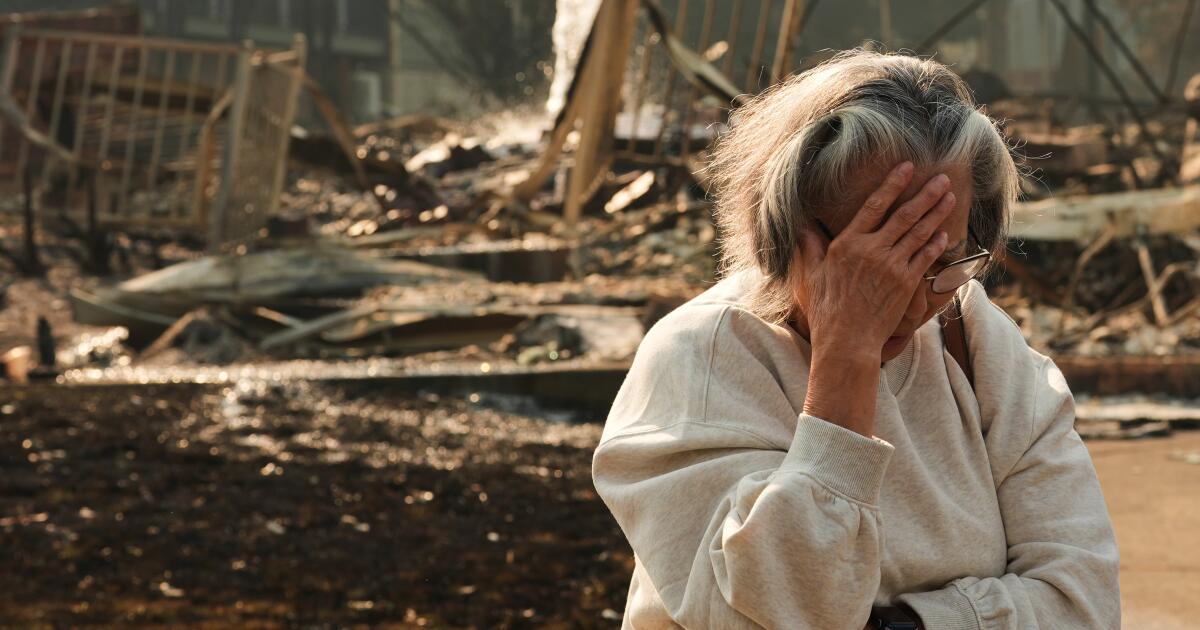
Fueled by ample dry vegetation after a snow-poor winter, the Spokane blazes had, by Monday, destroyed more than 700 structures and forced some 67,000 residents to evacuate.
Clemo serves as incident commander for California Interagency Management Team 7, a federally coordinated group trained to help lead the response to wildfires across the nation.
“At 3 o’clock [Saturday] we grabbed all 123 members of the team, put them on the road, drove north to Spokane and immediately moved our operations personnel into the field to assist with the management in the initial attack,” he said.
Clemo’s team is largely made up of firefighting personnel based in Southern California and the Central Coast, including members from Santa Monica, Los Angeles, Santa Barbara and Ventura. The California Department of Forestry and Fire Protection has dispatched about 150 personnel and 20 engines to Washington, while individual California fire departments are also loaning crews.
The Los Angeles County Fire Department, for example, sent an eight-person camp team and a three-person dozer crew to the Spokane wildfires on Monday, according to a department spokesperson.
The three fires burning around Spokane are already on track to become some of the most destructive blazes in the state’s history. The fires had collectively charred some 8,000 acres Monday afternoon with 0% containment.
“What we have been witness to and are managing now is a wind-driven brush fire that resulted in an urban conflagration in neighborhoods similar to [those in the] Palisades and Eaton [fires],” Clemo said. “They’re small in footprint but enormous in damage.”
Fortunately, lessons from Los Angeles County’ 2025 fire season have been applied in Washington, Clemo said.
For example, many firefighting resources were strategically pre-positioned once the National Weather Service issued a particularly dangerous situation warning for Saturday, he said.
This is the highest-level fire warning, signifying that the elements are in place for a perfect storm — with strong, gusty winds, low humidity and dry fuels capable of creating a raging wildfire.
Local law enforcement agencies also worked with great urgency to evacuate residents, Clemo added.
“The sheriff evacuated 60,000 people out of a portion of Spokane in a matter of two hours without injury or accident,” he said. “That’s unbelievable.”
He attributes the fact that no fatalities have been reported in part to the seriousness with which residents and public safety personnel have handled evacuations.
The handling of evacuations emerged as a point of criticism in the aftermath of the Eaton and Palisades fires, which killed 31 people. This was particularly the case in western Altadena, where alerts came hours after the blaze started and almost all of the Eaton fire’s 19 deaths took place.
Calmer winds and cooler temperatures assisted fire crews in their battle against the Spokane blazes Monday, but temperature are anticipated to climb back into the 90s by Wednesday.
Around 1,000 firefighters were on the ground Monday, a number that is expected to double in the coming days as mutual-aid crews continue to arrive from out of state.
The Associated Press contributed to this report.