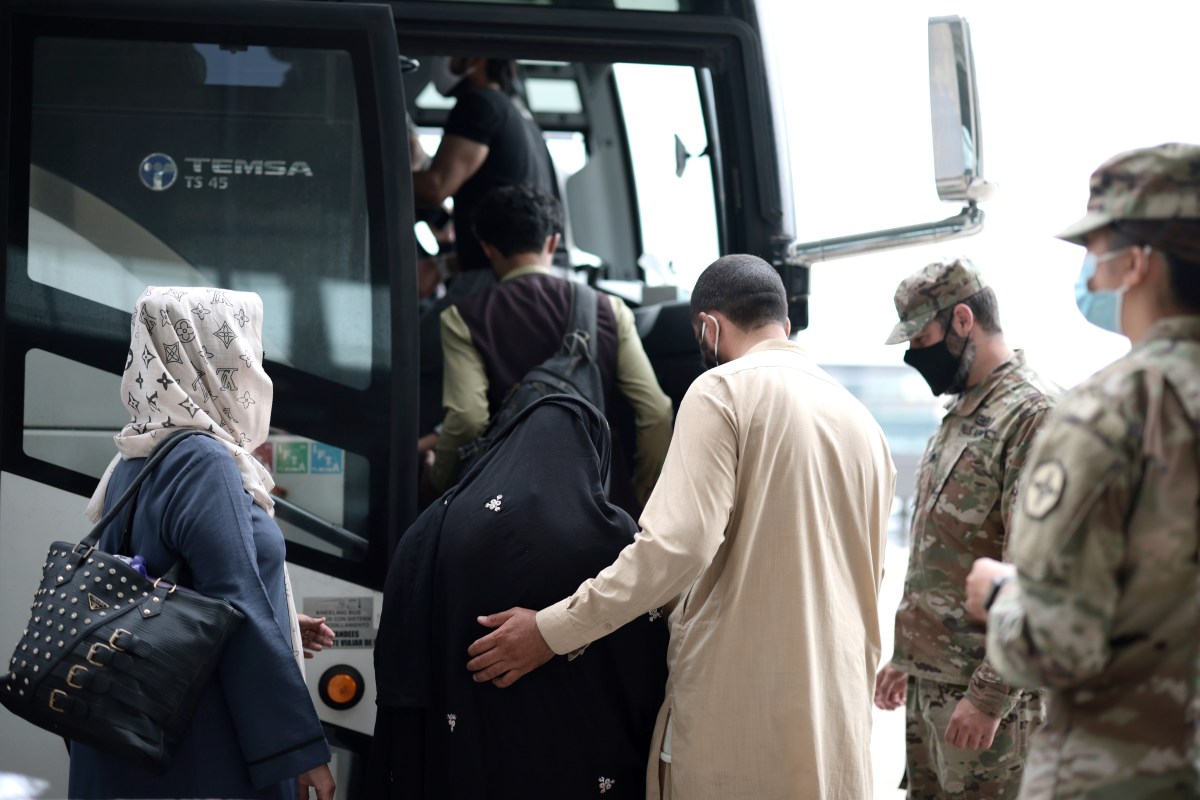
A federal judge ruled Wednesday that the Trump administration cannot use its travel ban against Afghan asylum seekers and their families.
In a brief ruling implementing an earlier decision, U.S. District Judge Anthony J. Trenga, appointed by President George W. Bush, overturned the U.S. State Department‘s policy of blocking family members of asylees from entering the country because of President Donald Trump’s travel ban.
The court ordered the government to issue travel documents to five beneficiaries within 15 days and reconsider two additional applications without regard to the proclamations, while retaining oversight of the case until the plaintiffs arrive in the United States.
The ruling represents one of the most significant judicial setbacks to the administration’s travel restrictions since Trump reinstated and expanded country-based entry bans in 2025. Those restrictions currently apply to nationals of Afghanistan and numerous other countries identified by the administration as presenting vetting and security concerns.
Newsweek reached out to the State Department for comment Wednesday afternoon.

Why the Judge Ruled Against the Government
The case was brought by seven Afghan asylum recipients who were granted protection in the U.S. following the 2021 fall of Kabul. After arriving in the U.S., each filed an I-730 petition seeking to bring spouses and children left behind in Afghanistan through the federal follow-to-join asylum process.
U.S. Citizenship and Immigration Services approved those petitions, but the State Department later denied or stalled the family members’ travel documentation, citing the travel-ban proclamations.
In a May 28 opinion that laid the groundwork for the ruling, Trenga questioned the government’s interpretation of the proclamations. Both presidential Proclamations 10949 and 10998 explicitly state that they do not apply to individuals who have been granted asylum and that nothing in the proclamations should be construed to limit a person’s ability to seek asylum.
The judge found that the plaintiffs’ family members were “clearly seeking asylum” through the derivative asylum process and therefore appeared to fall within the proclamations’ own exceptions. He also concluded that the State Department appeared to be applying a blanket policy rather than conducting the individualized review contemplated by immigration regulations governing follow-to-join asylum cases.
In Tuesday’s order, the court formally declared the State Department policy unlawful under the Administrative Procedure Act.
Responding to the ruling, Lupe Aguirre, deputy director of U.S. litigation at the International Refugee Assistance Project (IRAP), said the government had to allow approved asylees to reunite with their loved ones.
“August marks five years since our clients’ lives were thrown into chaos by the U.S. withdrawal from Afghanistan,” Aguirre said in a press release. “Because of their support for the United States, they remain in danger from the Taliban and our asylum laws are intended to protect them. Today the court affirmed that the State Department cannot use the travel ban to abandon this population, or any asylees seeking family reunification.”
How the Case Fits Into the Wider Travel Ban
The ruling does not invalidate Trump’s travel ban itself.
Instead, it targets the administration’s application of the ban to a specific category of people: spouses and children of individuals who have already won asylum in the United States and whose family-based asylum petitions have been approved by USCIS.
The first part of the travel ban, issued in June 2025, suspended entry from 19 countries, including Afghanistan, after the administration said those nations did not provide sufficient information for security screening. A subsequent proclamation, issued in December 2025, extended restrictions and added additional countries and travel-document categories. The administration argued the measures were necessary to address terrorism, public-safety and vetting concerns.
The plaintiffs argued that applying those restrictions to derivative asylees undermined a longstanding asylum-reunification system established by Congress.
The judge appeared to agree, emphasizing that State Department guidance gives USCIS primary responsibility for deciding I-730 petitions and limits the discretion of consular officers handling follow-to-join cases overseas.
Rejection of Key Government Arguments
The administration argued that the case should be dismissed because visa-related decisions are generally not reviewable by federal courts and because the plaintiffs lacked a protected legal interest in family reunification.
Trenga rejected those arguments.
The judge said the families had the right to bring the case because being separated from spouses and children for an extended period can be a real and significant harm. He also found that the lawsuit was not challenging individual visa decisions, but rather a broader government policy. In addition, the court said asylum recipients have a legitimate interest in having their family members’ applications handled according to the procedures set by Congress.
The judge also allowed claims to move forward arguing that the government may have applied the travel-ban rules in an unreasonable way and that the proclamations were unclear when it came to follow-to-join asylees. He noted allegations that the government interpreted similar language differently during Trump’s first-term travel ban in 2017, raising questions about the consistency of its current approach.
What Happens Next
Under Tuesday’s order, five family members must receive boarding foils within 15 days, while two other applicants must receive individualized adjudications free from the travel-ban restrictions. The judge also retained jurisdiction over the case and directed the parties to provide status updates every 14 days until all affected family members have received travel-eligibility determinations and arrived in the United States.
While the ruling could aid other families pursuing follow-to-join asylum benefits, the decision is narrowly focused on derivative asylees and does not block broader enforcement of the administration’s travel restrictions against other categories of foreign nationals.