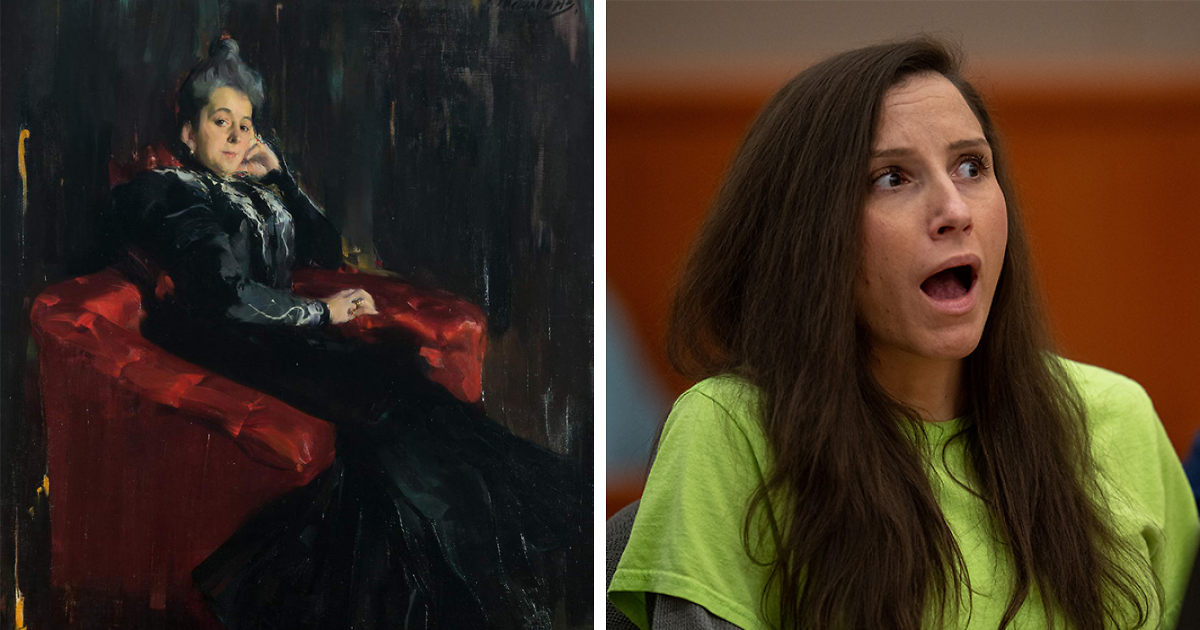
For years, Argentina believed it knew who slain María Marta García Belsunce.
The country watched her husband and several relatives stand trial, listened to accusations of a family cover-up, and debated one of the nation’s most famous m*rder mysteries.
But more than 20 years after the crime, the case took one final turn, proving that the truth had been hiding in plain sight all along.
The 50-year-old sociologist was found lifeless on October 27, 2002, inside the bathtub of her home in Carmel Country Club, an exclusive gated community near Buenos Aires.
Earlier that rainy Sunday, María Marta had cut short a tennis match because of the weather, watched a football game with relatives, and then cycled home to wait for her massage appointment.
Her husband, Carlos Carrascosa, later found her lying fully clothed in the bathtub, partially submerged in water and surrounded by blood.
Believing she had slipped, hit her head, and drowned, he called emergency services and reported it as a household accident.
Doctors at the scene agreed.
A death certificate listed the cause as a “non-traumatic cardiorespiratory arrest,” and the family prepared for her funeral.
Only María Marta’s half-brother, Juan Carlos Hurtig, remained unconvinced.
He insisted on an autopsy a month later, and the result stunned everyone.
Instead of a fall, forensic experts discovered five bullets lodged inside her skull.
What had appeared to be head injuries from striking a faucet were actually gunshot wounds.
The shocking discovery transformed the investigation overnight.
Prosecutor Diego Molina Pico accused Carrascosa and several relatives and family friends of staging the scene, destroying evidence, draining the bathtub, and even flushing away a bullet fragment later nicknamed the “sixth bullet.”
Rumors spread that the family sealed María Marta’s bullet wounds with superglue.
Public opinion turned sharply against them, and the case dominated newspaper headlines across Argentina.
Carrascosa was first convicted in 2007 for covering up the crime, then, after an appeal, was sentenced to life in prison in 2009 for m*rdering his wife.
Several relatives, friends, and even the doctor who treated María Marta were later convicted of participating in the alleged cover-up.
Throughout the trial, Carrascosa insisted he was innocent and argued that his wife had interrupted a burglary.
“There was no cover-up for 14 years. If it had been a cover-up, someone would have broken,” he later said.
Image credits: Netflix
After years of appeals, Argentina’s justice system dramatically reversed course.
In 2016, the Buenos Aires Court of Cassation found serious flaws in the original investigation, overturned Carrascosa’s conviction, and declared him innocent after he had spent more than five years behind bars.
His lawyer, Fernando Díaz Cantón, said, “I believe justice was finally served… He is innocent. He never killed his wife.”
The acquittal reopened the question that had haunted the country for over a decade: if Carrascosa didn’t do it, who did?
Investigators briefly pursued theories involving money laundering connected to the Juárez Cartel, but the claims collapsed for lack of evidence.
Attention instead returned to Nicolás Pachelo, a neighbor with a long history of burglaries inside Carmel Country Club.
María Marta had openly complained about him, believed he had stolen her beloved black Labrador, Tom, and had pushed for tighter security in the neighborhood.
Carrascosa maintained from the beginning that Pachelo had entered the house expecting it to be empty, panicked when María Marta unexpectedly returned home, and shot her to avoid being identified.
Cell phone records contradicted Pachelo’s alibi that he had been shopping in Buenos Aires with his mother.
Security footage placed him inside the gated community around the time of the k*lling, and witnesses later claimed he had purchased a .32-caliber handgun, the same caliber used in the m*rder.
One witness even alleged Pachelo admitted, “That old woman cost me 800,000 dollars,” referring to legal fees paid to divert suspicion.
Although Pachelo was initially acquitted of the m*rder in 2022, Argentina’s Buenos Aires Cassation Court reached a different conclusion in March 2024.
In a 310-page ruling, judges sentenced him to life imprisonment, finding that he had fatally shot María Marta during a robbery after she resisted.
Prosecutor María Laura D’Gregorio said Pachelo “attacked María Marta García Belsunce with a loaded firearm… to secure his impunity and avoid being recognized.”
The ruling also dismantled some of the case’s biggest myths.
Judges concluded that even doctors, police officers, and prosecutors initially failed to recognize the gunshot wounds, making it understandable that the family believed María Marta had suffered a tragic accident.
They also rejected claims that the family had used superglue to conceal the wounds.
After more than two decades of courtroom battles, wrongful convictions, discarded theories, and relentless public scrutiny, Carrascosa finally felt vindicated.
“All this evidence that has surfaced now was there from day one… Now I can die in peace,” he said.